BWA!
BWA, TO PROMOTE BELGIAN NATURAL WINEGROWERS (by Marc Vanel)
Produced without additives, natural wine is attracting more and more winegrowers in our country. The brand-new association BWA! — Belgian Wine Alternative — brings together 12 members, including one Dutch winegrower.
Although “natural” wine has existed for as long as people have made wine, it has no official status tied to a set of regulations, unlike wines with protected designations of origin or geographical indications. It is even prohibited to use the term commercially, under European rules. Yet it represents a strong worldwide trend, reinforced by the development of organic farming, hybrid grape varieties and healthier eating.
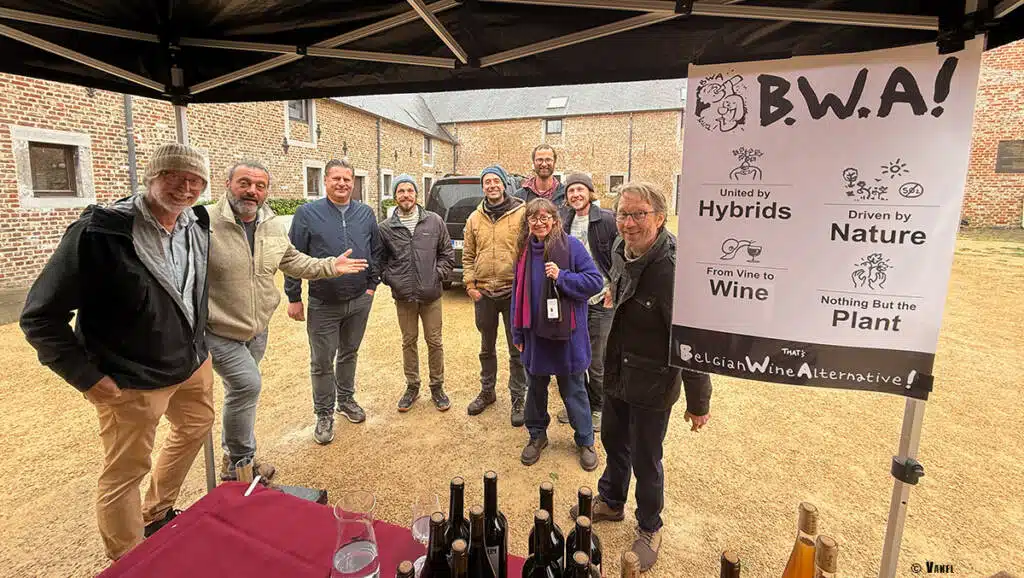
In Belgium, eleven Walloon and Flemish winegrowers created the non-profit association BWA! to promote their wines and their approach. Several were present alongside the Biovitis fair in Ottignies on 24 and 25 May. It was a wonderful opportunity to taste wines that remain little known, most of them very successful. Others will certainly join them in the coming months.
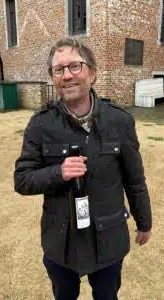
One of the first people to embark on the natural-wine adventure in Belgium was Servaas Blockeel. In 2012–13, he planted the first two plots of his Le Nid d'Étourneaux vineyard between Kortrijk and Oudenaarde, followed by two more. He cultivates roughly four hectares using interplanting and biodynamic methods. His wines are not aged in oak, but in oval plastic vats. No additives, fining or filtration: the juice must remain as pure as possible. His bottles sell out quickly and some enthusiasts have developed a real cult following.
“The blend,” he explains, “is made in the vineyard and everything is harvested together. Each time there are between four and eight different grape varieties. We started that way without knowing what it would produce. Now each cuvée has its own character, which returns every year with variations. There are three reds, one white and a rosé made from Roland, a grape variety that originally came from Quebec! To create something lively and distinctive, all the grapes are vinified in the same way: crushed and destemmed, followed by almost two weeks of maceration and fermentation.”
The white and rosé may macerate for slightly less time, but there is little difference. After pressing, the wine remains exclusively in polyethylene tanks, which allow oxygen transfer. During reductive phases it is left untouched. If the lees are clean, everything is retained and the wine stays there for two years.
The 2022 Mag blends four grape varieties from the oldest vines and surprised me with its elegant fruit and balance — enough to make me reconsider my opinion of natural wine. Price: €30.
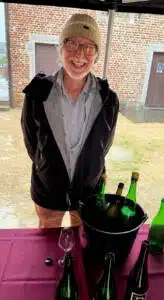
On the Flemish side, Mark Longin has run Proef de Passie for more than fifteen years, importing wines from small independent French producers who show great respect for their environment and often work with organic or biodynamic grapes. Alongside this activity, he teaches sommelier and wine-adviser courses at Syntra in Ghent. He planted hybrid vines in 2015.
He began with sixteen vines in his garden in Pollare (Ninove), then in 2020 planted, with his wife, a 2,000-vine vineyard in Haaltert near Aalst, which he named Terroir TerWaer. He also chose interplanting, with twelve grape varieties including Roland and Rondo. At the event in Ottignies he presented three wines, including an impressive pét-nat.
Tom Vandevenne in Leuven also makes a very fine pét-nat; I will return to it later. Tom Jacobs of Antidoot in Kortenaken, another BWA! member, was not present.
Finally, just across the border, Monique van der Goes and Ron Langeveld produce natural wine in Chaam in the Netherlands at their Dassemus vineyard, planted in stages since 2005 and now covering six hectares. Here natural wine is called “Wilde wijn”.
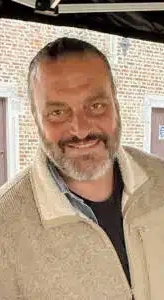
In Walloon Brabant, the non-profit organisation Les Pieds dans la Dyle was launched in 2017 in collaboration with local residents. Its founder is Pablo Cremers, a fifth-generation candle maker in Wavre who is also a winegrower. With his wife Jade, he tends and vinifies several plots around Wavre and in Ottignies at the Ferme de la Balbrière. He also buys grapes in France — Chambourcin, Plantet and Landal — to vinify. The latter is particularly successful and simply delicious. Made from 100% Wavre-grown grapes, the 2023 Les Reliques cuvée contains twelve grape varieties blended before fermentation and is well worth discovering. See also HERE.
In the province of Liège, close to the Dutch border, Arthur Joskin and his partner Gentiane also chose natural vinification at Château de Dalaheim. “The vineyard's original owner, Bart Nyssen, always worked ecologically; we no longer spray and no longer mow. In 2020 we began a natural approach to vinification that Gentiane and I discovered in Alsace. We studied the technique and have applied it to our wines since 2021.” Several cuvées are produced, with Cabernet Jura the freshest and most concentrated. The Dalaheim Castellum orange wine, tasted last year at the Festival of Belgian Vineyards organised in La Hulpe by Xavier Ide, was a pleasant surprise.
Other Walloon members of BWA! include:
- La Voix des Mêlés, Franck Van den Bulcke's project to develop an agroecological, socially transferable biodynamic vineyard on living soils. Two plots exist in Saint-Symphorien and Harmignies, south of Mons, but the first wines are still to come.
- Le Nectar in Ferooz near Gembloux, developed since 2023 by Martin Hernalsteen as part of a mixed-farming project using VCR grape varieties.
- Le Vignoble La Tête en l'Air, architect Matthieu Delatte's project in Dinant, where three hectares are being planted over four years between 2023 and 2027 to produce natural wines.
- La Vigne est Belle, a vineyard between Haut-Ittre and Braine-le-Château planted by Charlotte and Cyril, with the first wines expected in 2026.
Wonderful discoveries lie ahead, particularly as around ten more winegrowers could, in my opinion, join the association. A real breath of fresh air…
Marc Vanel, 29 May 2025
Pablo & Jade Cremers-Godin — Les Pieds dans la Dyle — Wavre
Servaas Blockeel — Le Nid d'Étourneaux — Kortrijk
Mark Longin — Terroir Terwaer — Pollare
Charlotte & Cyril — La Vigne est Belle — Haut-Ittre
Arthur Joskin & Gentiane Angeli — Château de Dalaheim — Dalhem
Franck Van Den Bulcke — La Voix des Mêlés — Mons
Jonah & Martin — Le Nectar — Grune
Matthieu Delattre — Le Vignoble La Tête en l'Air — Dinant
Monique van der Goes & Ron Langeveld — Dassemus — Chaam (NL)
Nicolas Bodart — Apivitis — Graux
Tom Jacobs — Antidoot Wild Ferments — Kortenaken
Tom Vandevenne — Leuven
Article and photos: Marc Vanel, 29 May 2025
Reproduced and adapted graphically with the author's permission.